To use a moka pot, fill the bottom chamber with hot water up to just below the safety valve, fill the funnel basket with finely ground coffee and level it without tamping, screw the pot together and heat it over medium-low heat with the lid open. Take it off the heat as soon as the coffee turns pale and starts to gurgle, then serve. The whole process takes about five minutes and gives you a small, strong, full-bodied coffee.
Key facts
- A moka pot brews at roughly 1 to 2 bar of pressure, far below the 9 bar used for espresso, so it makes strong coffee rather than true espresso.
- Fill water to just below the safety valve, never over it.
- Use a fine grind, slightly coarser than espresso, and do not tamp the grounds.
- Medium-low heat and an early finish are the two biggest fixes for bitter moka coffee.
- Aluminum pots do not work on induction and should be washed by hand, not in a dishwasher.
What is a moka pot and how does it work?
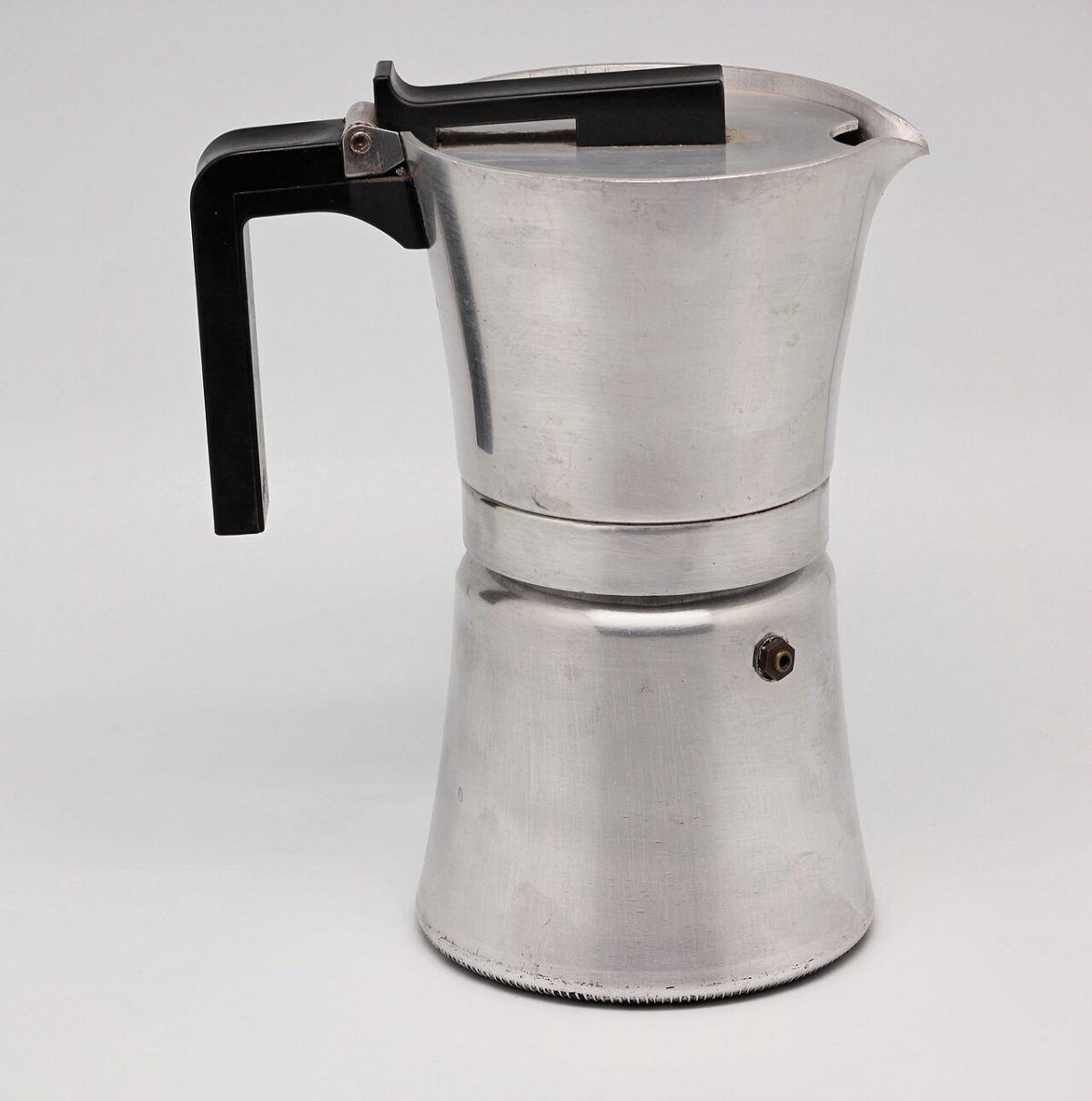
A moka pot is a three-part stovetop coffee maker: a bottom chamber for water, a funnel-shaped basket for the coffee and a top chamber that collects the finished brew. The design was popularized for home use by Alfonso Bialetti, whose Moka Express went on sale in Italy in 1933, according to the encyclopedia entry on the moka pot.
When you heat the pot, pressure builds in the bottom chamber from expanding air and steam. That pressure pushes hot water up through the coffee and into the top chamber. Moka coffee is extracted at about 1 to 2 bar, while espresso standards call for about 9 bar, which is why moka coffee tastes strong and rich but has less crema and a different texture from a café espresso. If you want to compare it with other methods, our guide to coffee brewing methods sets them side by side.
What do you need?
- A moka pot (sizes are counted in small espresso-style cups, so a “3-cup” pot makes about one generous mug)
- Fresh coffee, ground fine, a little coarser than espresso
- A kettle to preheat the water
- A stove: gas, electric or, for stainless steel pots only, induction
- A kitchen towel or oven mitt, because the metal gets very hot
How to use a moka pot, step by step
- Preheat the water. Boil water in a kettle. Starting with hot water shortens the time the coffee sits over the flame, which helps prevent a cooked, metallic taste.
- Fill the bottom chamber. Pour the hot water into the base up to the fill line or just below the safety valve. Never cover the valve.
- Fill the basket. Drop the funnel into the base and fill it with ground coffee until it is level with the rim. Tap the side to settle the grounds and wipe the rim clean. Do not press the coffee down.
- Assemble carefully. Using a towel to hold the hot base, screw on the top chamber firmly so it seals, but do not overtighten.
- Heat gently. Put the pot on medium-low heat with the lid open so you can watch. On gas, keep the flame within the base so it does not lick the handle.
- Watch the flow. After a few minutes, dark coffee rises from the spout in a steady stream. Turn the heat down if it spurts.
- Stop early. When the stream turns pale and honey-colored, or you hear gurgling, remove the pot from the heat. Some people run the base under cold water or wrap it in a damp towel to halt extraction immediately.
- Serve. Stir the coffee in the top chamber, because the first and last parts of the brew taste different, then pour.
How much coffee and water should you use?
You do not choose the ratio as you do with a pour-over: the pot’s basket and fill line set it for you. Filling the basket and filling the base to the valve gives the strength the pot was designed for. If you want a milder drink, do not underfill the basket, because water will channel through loose grounds and taste thin. Instead, brew a full pot and dilute it afterwards with hot water or milk.
| Problem | Likely cause | What to change |
|---|---|---|
| Bitter, harsh or burnt | Heat too high, brewed too long, or a dark roast ground very fine | Lower the heat, stop at the first pale stream, try a coarser grind |
| Sour or thin | Grind too coarse, basket underfilled, or cold water start | Grind finer, fill the basket level, start with hot water |
| Coffee spurts or sputters | Heat too high | Turn the heat down as soon as coffee appears |
| Little or no coffee comes up | Grounds packed too tight or grind too fine; worn gasket | Do not tamp, grind slightly coarser, replace the rubber seal |
| Metallic taste | Pot sat too long on the heat, or new pot not seasoned | Preheat water, brew and discard one or two pots when new |
Which coffee and grind work best?
Medium and medium-dark roasts are the classic choice because they give the chocolatey, nutty flavors most people expect from a moka pot. Light roasts can work, but they tend to taste sharp unless you start with hot water and keep the heat low. Our coffee roast levels explained covers what changes from light to dark.
Aim for a grind finer than drip coffee but slightly coarser than espresso. Pre-ground espresso coffee usually works, but if it chokes the pot or tastes bitter, try a step coarser. A burr grinder gives the most even results.
How do you clean a moka pot and keep it safe?
- Let the pot cool before you unscrew it. The base stays hot and under some pressure just after brewing.
- Empty the grounds and rinse every part with warm water. Most makers advise against detergent, which can leave a taste.
- Do not put an aluminum moka pot in the dishwasher: dishwasher detergents corrode and discolor aluminum.
- Dry the parts separately before you store them, so the threads and seal do not trap moisture.
- Check that the safety valve is clear, and replace the rubber gasket and filter plate when they wear or the pot starts to leak around the seam.
- Aluminum pots do not work on induction hobs; stainless steel pots do.
Is moka pot coffee strong in caffeine?
A moka pot makes a concentrated coffee, and a full 3-cup pot can contain as much caffeine as a large mug of drip coffee, depending on the beans and how much you drink. The U.S. Food and Drug Administration says that for healthy adults, 400 milligrams of caffeine a day is an amount not generally associated with negative effects. Our guide to caffeine content in coffee and tea has typical ranges.
What can you make with moka pot coffee?
Drink it straight in small cups, add hot water for a long black-style coffee, or pour it over steamed or frothed milk for a homemade latte or cappuccino. It is not identical to espresso, but it makes a good base for milk drinks. Our comparison of espresso drinks explains the classic proportions.
Frequently asked questions
Is moka pot coffee the same as espresso?
No. A moka pot brews at about 1 to 2 bar of pressure, while espresso machines use about 9 bar. Moka coffee is strong and rich but has less crema and a different texture.
Should you tamp coffee in a moka pot?
No. Fill the basket level and tap it to settle the grounds, but do not press them down. Tamping can block the flow and make the coffee bitter.
Why does my moka pot coffee taste burnt?
Usually the heat is too high or the pot stayed on the stove too long. Start with hot water, use medium-low heat and take the pot off as soon as the coffee turns pale.
Can you use a moka pot on an induction hob?
Only if it is made of stainless steel or has an induction-compatible base. Classic aluminum moka pots do not work on induction.
How often should you replace the gasket?
Replace the rubber seal when it hardens, cracks or the pot starts leaking around the middle. With daily use, many people change it about once a year.
Brew your first pot
Start with hot water, a level basket of fine coffee and gentle heat, then stop the brew as soon as it turns pale. After two or three pots, you will know exactly how your stove and your beans behave. For more ways to brew at home, explore our coffee guides.
Featured photo: Moka KILT. 01 by Coyau, CC BY-SA 3.0.