A good starting coffee to water ratio for drip and pour-over coffee is about 1:16, meaning 1 gram of coffee for every 16 grams (or milliliters) of water. In kitchen measures, that is roughly 2 level tablespoons of ground coffee per 6 fl oz of water. Use more coffee (1:12 to 1:15) for a stronger cup and less (1:17 to 1:18) for a lighter one. Immersion, espresso and cold brew use different ratios, listed below.
Key facts
- Drip and pour-over: about 1:15 to 1:17 by weight.
- Kitchen shortcut: 1 to 2 tablespoons of ground coffee per 6 fl oz of water, the National Coffee Association’s “Golden Ratio”.
- French press: 1:10 to 1:16, with water at about 93 °C and roughly four minutes of contact.
- Espresso works the other way round: about 1 part coffee to 2 parts liquid espresso.
- Weighing beats scooping: a tablespoon of ground coffee can hold anywhere from about 5 to 7 grams.
What does a coffee ratio mean?
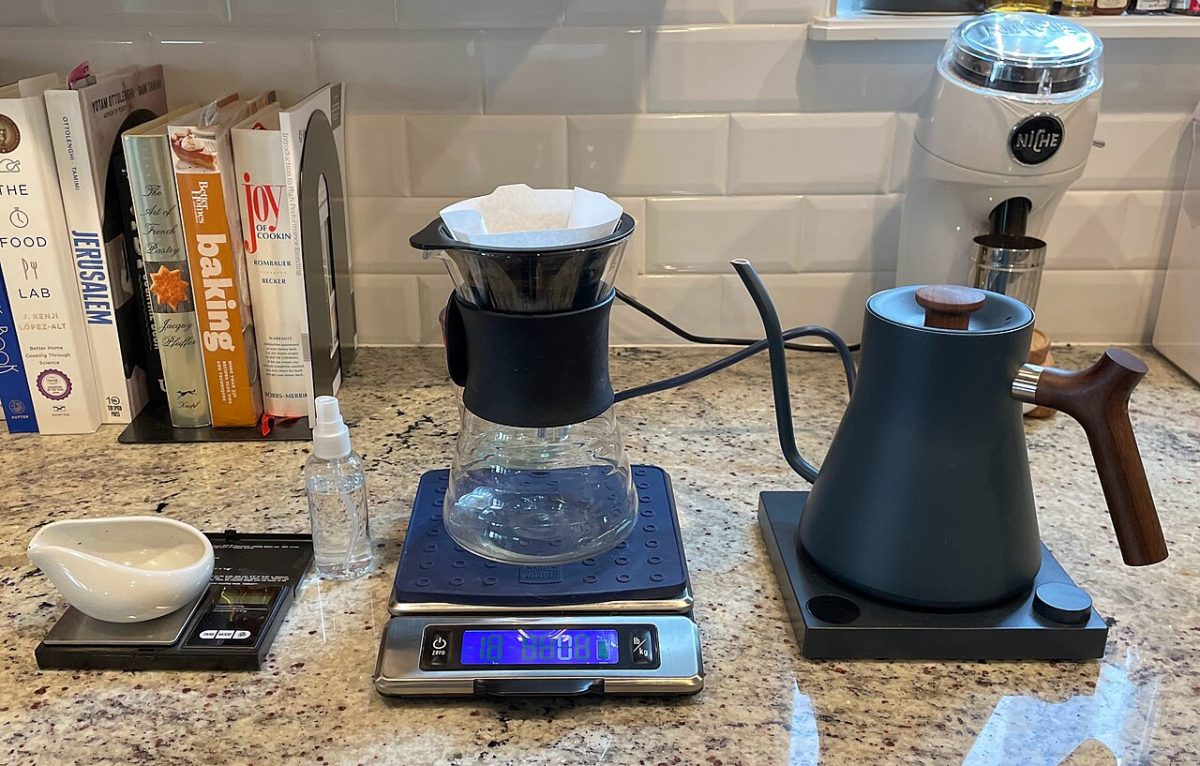
A ratio such as 1:16 compares the weight of dry coffee with the weight of water you brew it with. Because 1 milliliter of water weighs 1 gram, you can measure the water by volume and the coffee by weight on a kitchen scale. For example, 20 g of coffee with 320 ml of water is a 1:16 ratio, enough for one large mug.
Ratio is one of four main levers on the taste of coffee, alongside grind size, water temperature and brew time. Change one at a time so you can tell what made the difference. Our coffee brewing methods buyer’s guide explains how each method uses those levers.
What is the golden ratio for coffee?
The National Coffee Association calls 1 to 2 tablespoons of ground coffee for every 6 ounces of water the “Golden Ratio” for drip coffee. Specialty coffee professionals usually work by weight. The long-cited Golden Cup guideline associated with the Specialty Coffee Association is about 55 grams of coffee per liter of water, which is close to 1:18; many home brewers go slightly stronger, around 1:15 to 1:17. The Specialty Coffee Association’s standards program sets the test methods brewer manufacturers use.
Coffee to water ratio by brewing method
| Method | Ratio (coffee:water) | Example | Notes |
|---|---|---|---|
| Drip machine | 1:15–1:17 | 60 g coffee to 1 liter water | Medium grind; about 2 tbsp per 6 fl oz |
| Pour-over | 1:15–1:17 | 20 g coffee to 320 g water | Medium-fine grind; adjust with grind first |
| French press | 1:10–1:16 | 30 g coffee to 450 g water | Coarse grind, about 4 minutes |
| AeroPress | 1:12–1:16 | 15 g coffee to 220 g water | Many recipes; some brew a concentrate and dilute |
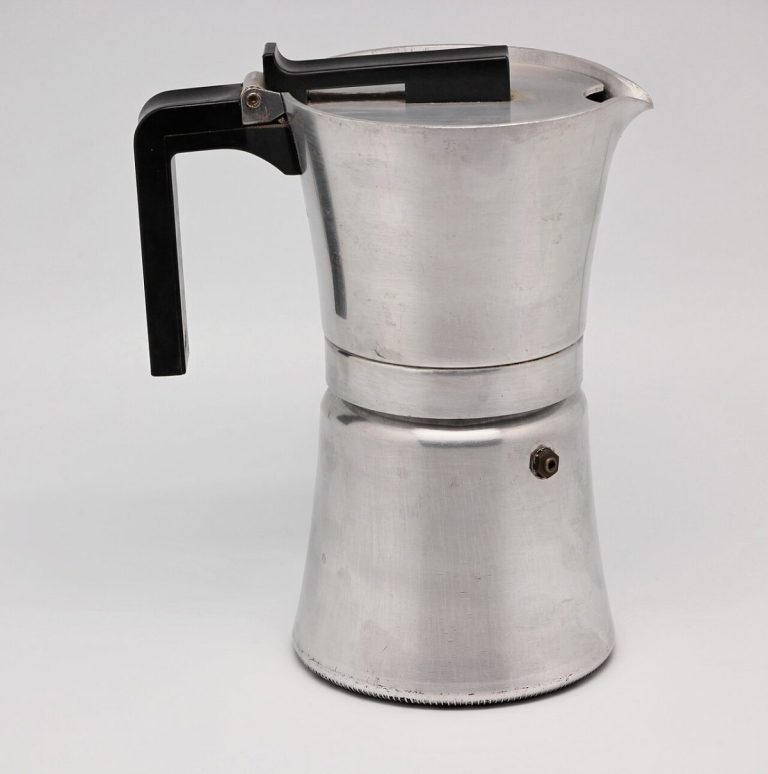
| Moka pot | Set by the pot | Fill the basket level, water to the valve | Do not tamp; see our moka pot guide |
| Espresso | About 1:2 (coffee to liquid espresso) | 18 g in, about 36 g out | Measured by the output, not the water used |
| Cold brew concentrate | About 1:4–1:8 | 100 g coffee to 600 ml water | Dilute before drinking |
| Turkish coffee | About 1:10 | 6–7 g coffee to a 60–70 ml cup | Powder-fine grind, unfiltered |
For the stovetop method, see how to use a moka pot. For cold coffee, our comparison of cold brew and iced coffee explains why cold brew starts as a concentrate.
How many tablespoons of coffee per cup?
A coffee maker’s “cup” is usually 5 or 6 fl oz, not an 8 oz measuring cup or a 12 oz mug. That mismatch is behind a lot of weak coffee. Use this as a guide:
| Water | Grams of coffee (about 1:16) | Level tablespoons (approx.) |
|---|---|---|
| 6 fl oz (180 ml) | 11 g | 2 |
| 8 fl oz (240 ml) | 15 g | 2.5–3 |
| 12 fl oz (355 ml) | 22 g | 4 |
| 1 liter (about 34 fl oz) | 60–65 g | 11–12 |
| 12-cup drip carafe (60 fl oz, 1.8 l) | 110 g | about 18–20 |
Tablespoon figures assume about 5.5 g per level tablespoon of medium-ground coffee. Dark roasts are less dense than light roasts, so a scoop of dark roast weighs less. If you use scoops, weigh one once and adjust.
How do you adjust the ratio for taste?
- Too strong or heavy? Use less coffee, moving toward 1:17 or 1:18.
- Weak or watery? Use more coffee, moving toward 1:15. If it is weak and sour, try a finer grind too.
- Bitter and harsh? The ratio may be fine; try a coarser grind, slightly cooler water or a shorter brew.
- Sour or thin? Try a finer grind, hotter water or a longer brew before adding more coffee.
- Making it with milk? Brew a little stronger, around 1:13 to 1:15, so the coffee is not lost in the milk.
Does water temperature and quality matter?
Yes. For French press, the National Coffee Association suggests water at about 93 ± 3 °C, which is the usual target for hot brewing in general: just off the boil. Water that is too cool under-extracts and tastes sour; water at a hard boil can push bitterness in some methods. Coffee is mostly water, so if your tap water tastes of chlorine or minerals, filtered water makes a noticeable difference.
Does a stronger ratio mean more caffeine?
Generally, more coffee per cup means more caffeine in that cup. A 1:12 brew can carry noticeably more caffeine than a 1:18 brew of the same size. The U.S. Food and Drug Administration says up to 400 milligrams a day is generally not associated with negative effects for healthy adults. Our guide to caffeine content has typical amounts by drink.
Frequently asked questions
What is the best coffee to water ratio?
For drip and pour-over, start at 1:16 (1 g coffee to 16 g water) and adjust between about 1:15 and 1:18 to taste.
How many grams of coffee for one cup?
For an 8 fl oz (240 ml) cup at 1:16, use about 15 g of coffee. For a 12 oz mug, use about 22 g.
How many tablespoons of coffee for 12 cups?
A 12-cup carafe usually holds about 60 fl oz. At 1:16, that needs about 110 g of coffee, roughly 18 to 20 level tablespoons.
What ratio is French press coffee?
The National Coffee Association suggests 1:10 to 1:16. Many people start around 1:15 with a coarse grind and a four-minute steep.
Should I measure coffee by weight or volume?
Weight is more accurate. A tablespoon of ground coffee can range from about 5 to 7 grams depending on the roast and grind.
Start with 1:16
Weigh 15 g of coffee for every 240 ml of water, brew, taste and adjust one step at a time. Once you find your ratio, write it down. For more brewing help, explore our coffee guides.
Featured photo: Coffee Pour Over Setup by Cerebral726, CC BY-SA 4.0.