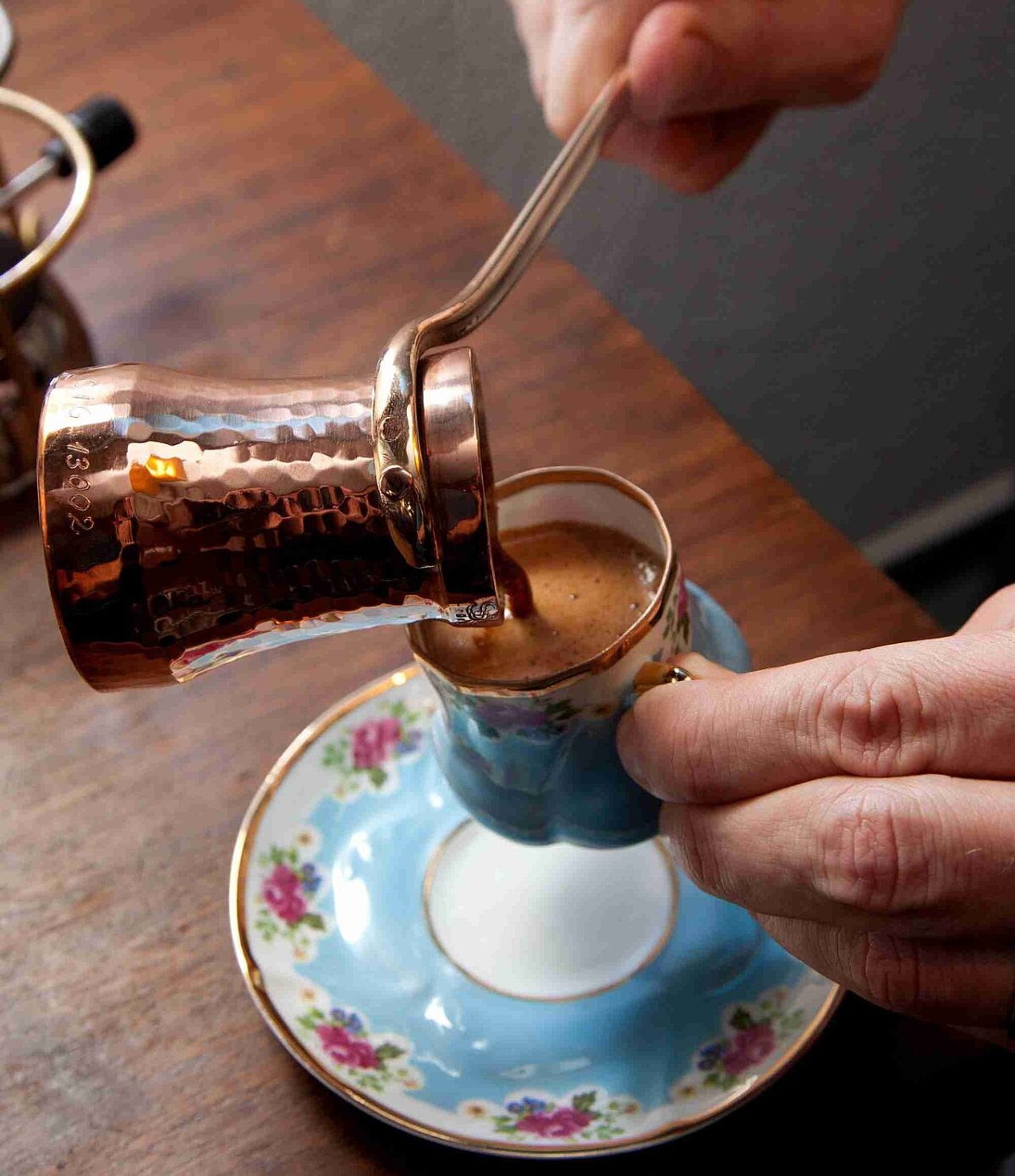
Turkish coffee is coffee ground to a fine powder and simmered slowly with cold water, and sugar if you want it, in a small long-handled pot called a cezve. It is not filtered: it is poured, foam and all, into a small cup, and the grounds settle to the bottom while you wait. The result is thick, strong and aromatic, and it usually comes with a glass of water on the side. Turkish coffee culture and tradition is listed by UNESCO as intangible cultural heritage.
Key facts
- The coffee is ground to a powder, finer than espresso.
- It is brewed in a cezve with cold water and heated slowly until foam rises; it is never boiled hard.
- Sugar goes in before brewing, so you order it plain, a little sweet, medium or sweet.
- It is unfiltered: let the grounds settle and stop before the last sip.
- UNESCO inscribed Turkish coffee culture and tradition on its Representative List in 2013.
What makes Turkish coffee different?
Three things set it apart from other coffees. First, the grind: beans are milled to a flour-like powder, which lets the coffee extract quickly and gives the drink its body. Second, the method: the coffee is not filtered or pressed, so tiny particles stay suspended in the cup and the rest sink as sediment. Third, the foam, called köpük in Turkish, which forms on top during slow heating and is considered a sign of a well-made cup.
UNESCO’s listing for Turkish coffee culture and tradition describes freshly roasted beans ground to a fine powder, mixed with cold water and sugar, brewed slowly on a stove to produce the foam, and served in small cups with a glass of water. It stresses the social side too: the coffee is drunk mainly in coffeehouses, where people meet, talk and share news. Our piece on why cafés matter as a third place looks at that role more widely.
How do you order Turkish coffee?
Because sugar is added to the pot before brewing, you cannot sweeten it afterwards in the usual way. You choose the sweetness when you order:
| Turkish term | Meaning | Typical sugar |
|---|---|---|
| Sade | Plain | None |
| Az şekerli | A little sugar | About half a teaspoon |
| Orta şekerli | Medium | About one teaspoon |
| Şekerli | Sweet | About two teaspoons |
Sugar amounts vary by café and are a rough guide. If you are not sure, medium is a common middle ground. The coffee is often served with a piece of lokum (Turkish delight) or a small sweet, and almost always with water: sip the water first to clear your palate.
How do you drink Turkish coffee?
- Wait a minute or two after it is served so the grounds can settle.
- Do not stir it; that brings the sediment back up.
- Sip slowly from the top. The cup is small, usually around 60–70 ml, so it is a coffee to linger over rather than gulp.
- Stop when you reach the thick layer at the bottom. You are not meant to drink the grounds.
- Turkish coffee is traditionally served without milk.
In Turkey and nearby countries, some people turn the empty cup upside down on its saucer and read shapes in the grounds as a fortune. It is a social game, not a requirement, and many cafés do not expect it.
How do you make Turkish coffee at home?
You need a cezve (or the smallest saucepan you own), very finely ground coffee, cold water and a small cup. Many shops sell coffee labelled for Turkish coffee already ground; most home grinders cannot reach a fine enough powder.
- Measure cold water with the cup you will serve in, about one cup per person, and pour it into the cezve.
- Add about one heaped teaspoon (roughly 6–7 g) of coffee per cup, plus sugar if you want it.
- Stir well to mix, then stop stirring for the rest of the brew.
- Heat slowly over low to medium-low heat. Watch closely: after a few minutes, foam begins to rise.
- When the foam swells toward the rim, just before it boils, take the cezve off the heat.
- Spoon a little foam into each cup, then pour the coffee slowly so the foam stays on top.
- Let it rest for a minute before serving with a glass of water.
If the coffee boils over or bubbles hard, it loses its foam and can taste flat or bitter. The fix is lower heat and patience. Cooks differ on whether to bring the foam up once or two or three times; one rise is the simplest and gives good results.
Is Turkish coffee stronger than other coffee?
It tastes strong because it is concentrated and unfiltered, but each cup is small. The caffeine depends on how much coffee you use and how much you drink; one cup can be roughly comparable to a shot of espresso. Our guide to caffeine content in coffee and tea gives typical ranges.
How does it compare with Greek and Arabic coffee?
Greek coffee is made the same way and is essentially the same drink under a different name. Arabic coffee (qahwa) is different: it is usually made from lighter-roasted beans, often spiced with cardamom, filtered as it is poured from a long-spouted pot called a dallah, and served without sugar alongside dates. The encyclopedia entry on Turkish coffee lists the many regional names, from Bosnia to the Caucasus. For more traditions, see our tour of coffee culture around the world.
Frequently asked questions
Do you drink the grounds in Turkish coffee?
No. Let the grounds settle for a minute after it is served and stop sipping when you reach the thick layer at the bottom.
Can you add milk to Turkish coffee?
Traditionally it is served black. Some modern cafés offer milk versions, but the classic drink is plain or sweetened with sugar.
What grind is Turkish coffee?
The finest grind there is, a powder similar to flour and finer than espresso. Most home burr grinders cannot reach it, so many people buy coffee ground for Turkish coffee.
Can you make Turkish coffee without a cezve?
Yes. A very small saucepan works. What matters is gentle heat and taking it off the heat as soon as the foam rises.
Why is Turkish coffee served with water?
The water clears your palate before the coffee so you can taste it fully. It also balances the strong, sweet drink.
Try it the traditional way
Order it medium sweet, sip the water first, let the grounds settle and take your time. If you enjoy coffeehouse history, our short history of chess and coffeehouses is a good next read, and there is more in our café culture guides.
Featured photo: Türk Kahvesi – Bakir Cezve by Eaeeae, CC BY-SA 3.0.