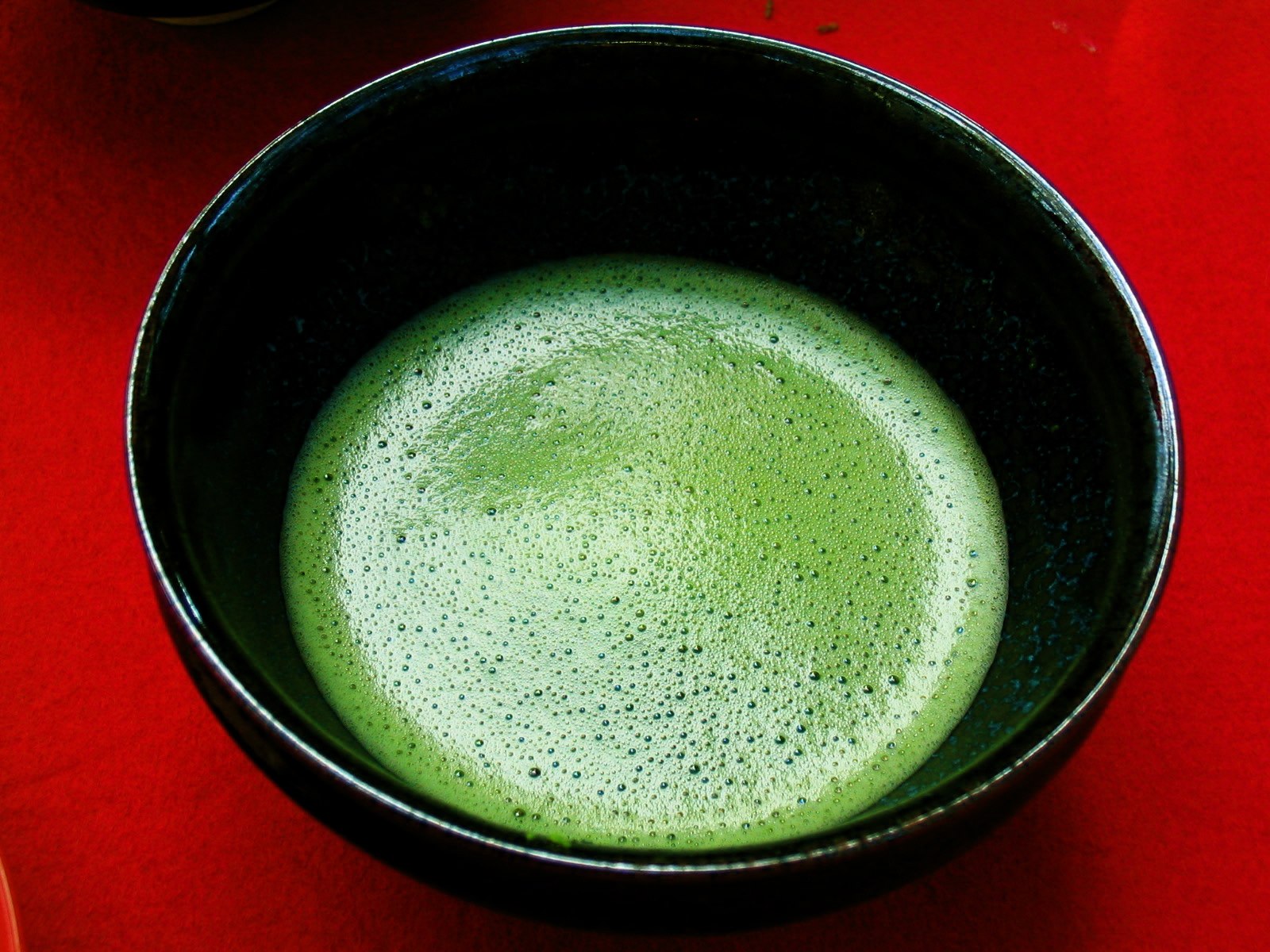
Matcha is a finely powdered Japanese green tea made from leaves that are shaded from the sun before harvest. Instead of steeping leaves and throwing them away, you whisk the powder into hot water and drink all of it. That single difference explains most of what makes matcha distinctive: its vivid color, its thick, almost velvety texture, its savory depth and its fairly strong dose of caffeine.
The rest of this guide covers where the powder comes from, how it is prepared, and how to order or make it with confidence.
Key takeaways
- Matcha is powdered green tea from shade-grown leaves, so you drink the whole leaf rather than an infusion.
- Shading keeps the amino acid theanine high, which gives matcha its rounded, savory taste.
- The dried leaf, called tencha, is ground into powder, traditionally on a stone mill.
- Matcha is the tea of the Japanese tea ceremony, where it is whisked to a light foam and served hot.
- Caffeine varies a lot between powders, so treat a bowl as a real caffeinated drink.
What matcha is, and how it differs from other green tea
All green tea comes from the tea plant, and the leaves are heated soon after picking so they stay green. Most green teas, sencha for example, are rolled leaves that you steep and strain. If you want a refresher on how green tea fits among the other families, our comparison of the main types of tea lays out the processing steps.
Matcha takes a different route. A 2018 review in the journal Nutrients describes it as “a fine-powdered green tea that is prepared from tea leaves protected from sunlight,” and notes that it needs about three weeks of shade cultivation before harvest (Unno and colleagues, Nutrients). The same paper explains why the shade matters. Theanine is the most abundant amino acid in green tea, and sunlight converts some of it into catechins, the compounds behind astringency. Less sun means more theanine left in the leaf, which is a large part of matcha’s mellow, brothy character.
How matcha is made: from shaded leaf to powder
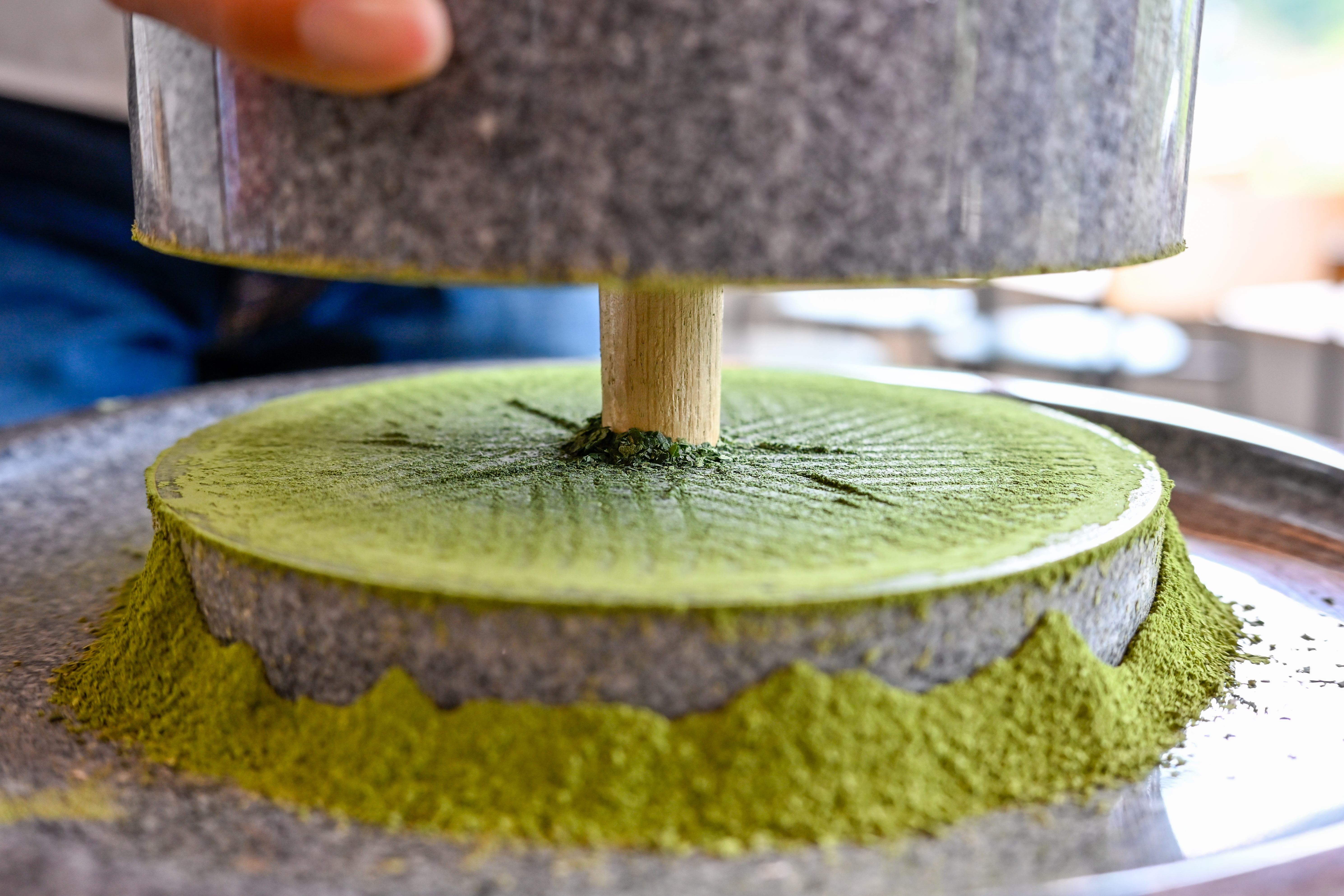
After harvest, the leaves are dried. The dried leaf intended for matcha is called tencha, and Japan’s national tourism organization describes visitors grinding “dried tea called tencha” into “the fine powder known as matcha” at a tea museum in Shizuoka. Grinding is traditionally done on a stone mill, a slow process that produces a very fine powder.
Uji, in Kyoto Prefecture, is one of the names most often linked with matcha. According to Japan’s official tourism guide to Uji, tea was first taken in Japan in powdered form, the priest Eisai taught Uji’s priests how to grow it, and the town became closely associated with green tea as one of the first places to cultivate it. Powdered green tea went on to become central to the tea ceremony.
Matcha in the tea ceremony
The Japanese tea ceremony is called chanoyu or sado, “the way of tea,” and the tea served is always matcha. Japan’s official tea ceremony guide lists the core tools: a tea bowl (chawan), a bamboo scoop for the powder, and a bamboo whisk called a chasen. It also describes the guest’s part. You raise the bowl respectfully, turn it slightly so you do not drink from its front, sip, and compliment the tea and the bowl before passing it on. Small sweets are served alongside.
You do not need to master any of that to enjoy matcha at a café or at home, but it explains a few habits you may notice: the wide bowl, the bamboo whisk and the small sweet served on the side.
How to prepare a bowl at home
Here is a simple, forgiving method for a thin, everyday bowl.
- Warm the bowl with hot water, then pour that water away and dry the bowl.
- Sift a small amount of powder into the bowl to break up clumps. The Nutrients review notes that 2 to 3 grams per cup is typical in Japanese tea ceremonies; start toward the lower end.
- Add a small amount of hot water that has cooled a little off the boil. As with other green teas, very hot water tends to pull out bitterness.
- Whisk briskly from the wrist until a fine foam covers the surface.
- Drink it right away, while it is warm and the powder is still suspended.
If you already brew loose leaf tea at home, the main adjustments are the sift and the whisk. There is no steeping time to manage, because nothing is strained out.
Grades, lattes and what to look for
You will see matcha sold for drinking straight and for cooking or lattes. Matcha is widely used in sweets and savory food in Japan too; the tourism guide mentions matcha salt and green tea soba. For drinking on its own, look for powder that is bright green rather than dull or yellowish, finely milled, and sold in a sealed, light-proof container. Once opened, keep it airtight and away from heat and light, and use it fairly quickly.
| Way to drink it | What you taste | Good for |
|---|---|---|
| Thin bowl, whisked with water | Grassy, savory, gently bitter | Tasting the tea itself |
| Matcha latte with milk | Softer, creamier, sweeter if sweetened | An easy introduction |
| Iced matcha | Bright and refreshing | Warm afternoons |
| In baking or desserts | A green-tea note behind sugar and fat | Cooking, not tasting |
Frequently asked questions
Does matcha have more caffeine than regular green tea?
Often, yes, because you consume the whole powdered leaf. The Nutrients review measured caffeine across seven samples and found a very wide range, from about 6 to 44 mg per gram of powder, partly because young leaves and buds hold more caffeine than mature leaves. That variation is why our piece on caffeine and focus suggests paying attention to how a specific drink affects you rather than relying on a single number.
Is matcha the same as green tea powder for baking?
Not necessarily. Some powders sold for cooking are made for color and flavor in recipes rather than for drinking straight. If you want to drink it plain, choose powder sold for that purpose.
Can I make matcha without a bamboo whisk?
You can. A small handheld frother or a jar with a tight lid and a vigorous shake will mix the powder, though the foam will be coarser. Sifting first matters more than the tool.
Getting started with matcha
Start with a thin bowl made with water so you taste the tea itself, then try it with milk if you prefer something gentler. Buy small quantities, store them well, and keep the water just off the boil. For more on the wider world of tea, browse our tea guides.