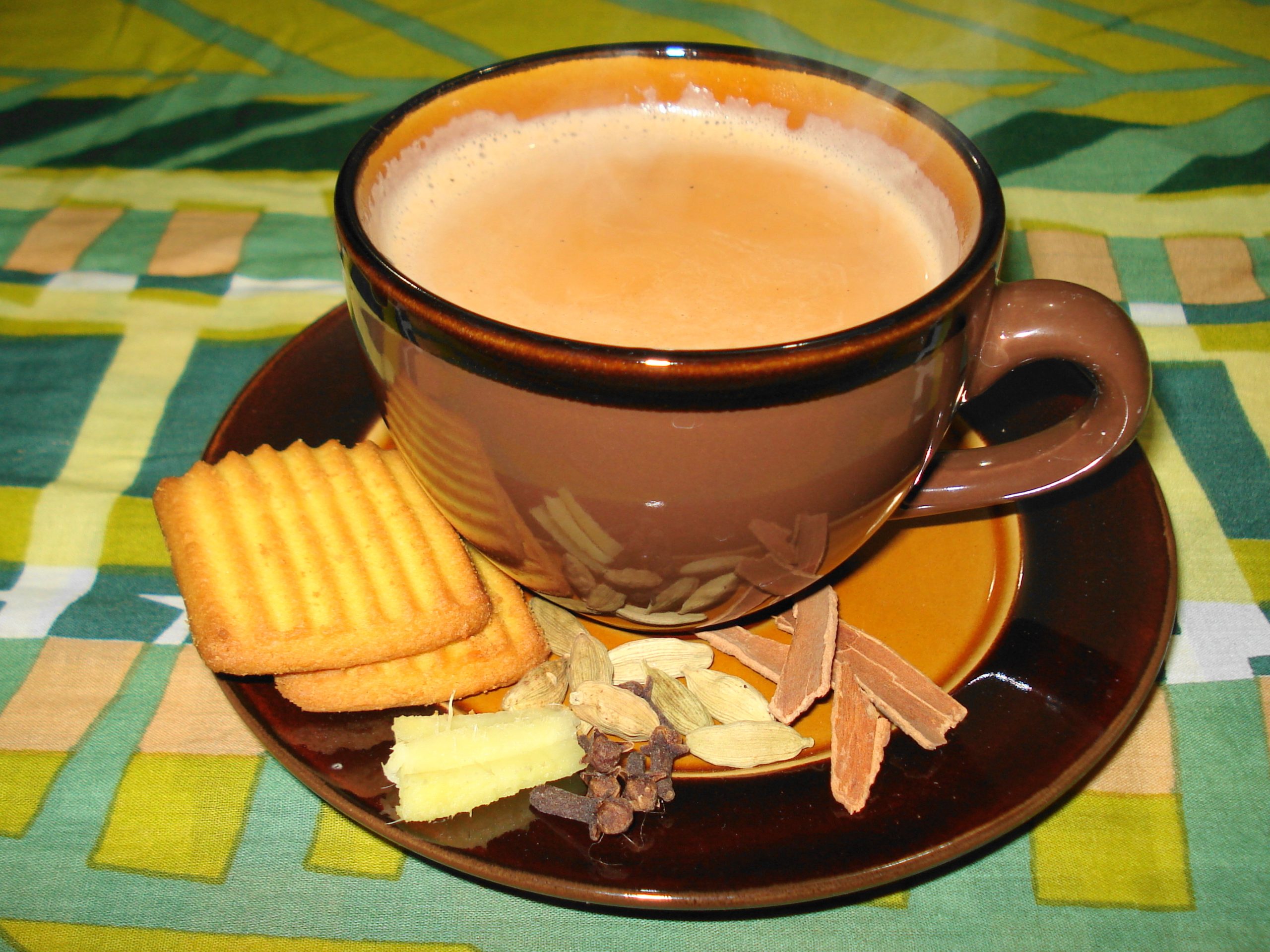
Masala chai is black tea simmered with spices, milk and sugar, the everyday spiced tea of much of India. Unlike a cup of tea steeped in a pot, it is cooked on the stove: water and spices go in first, then tea leaves, then milk, and the whole thing is brought back to a simmer before it is strained. Once you understand that order, you can adjust strength, sweetness and spice to your own taste. The walkthrough below follows one pot from start to finish.
Key takeaways
- Masala chai is made by simmering, not steeping: spices, then tea, then milk.
- Ginger, cardamom, cinnamon and cloves are common spices, but blends vary widely.
- A strong black tea stands up best to milk and spice.
- Ladling the chai back into the pot aerates it, a technique street vendors use.
- Regional styles range from extra-milky and sweet to pink, salted tea from Kashmir.
A little background on masala chai
Tea plants were found in 1824 in the hills on the Burma and Assam frontier, according to Britannica’s article on tea, and the British introduced tea culture to India in the 1830s. Drinking it daily became widespread much later. A detailed Al Jazeera feature on India’s chai describes how, during the Great Depression, tea companies turned to the Indian market, with tactics such as factory tea breaks, demonstrations and sales at railway stations. Indians made the drink their own, adding spices, milk and sugar. Milk helped stretch costly tea leaves, and the spiced brew was compared to kadha, a traditional herbal decoction.
Today, as the same feature notes, citing Tea Board India figures, India is the world’s largest consumer of tea and its second-largest producer. Chai is sold everywhere from roadside stalls to trains, often by vendors known as chaiwallahs.
Masala chai at home: the scenario
Say it is a cold evening and you want two generous cups of chai. You have loose black tea, whole milk, sugar, fresh ginger, a few green cardamom pods, a cinnamon stick and some cloves. You also need a small saucepan, a ladle and a fine strainer.
For tea, a robust black tea is the usual choice. If you are not sure what makes black tea different from green or oolong, our comparison of the main types of tea explains how oxidation shapes flavor and why black tea takes milk so well.
Step by step at the stove
- Prepare the spices. Lightly crush two or three cardamom pods and a couple of cloves, break a small piece of cinnamon, and grate a thumb-sized piece of ginger. Crushing helps release flavor into the water.
- Simmer the spices in water. Put roughly one and a half cups of water in the pan with the spices and sugar to taste. The Al Jazeera recipe starts this way, simmering water with grated ginger, cinnamon, sugar and lemongrass.
- Add the tea. Add about two teaspoons of loose black tea and keep simmering until the water turns a deep, dark color.
- Pour in the milk. Add about a cup of whole milk and bring the pan back to a gentle simmer. Watch it closely, because milk can rise and boil over quickly.
- Aerate. Lift a ladleful and pour it back into the pan from a little height, several times. The feature credits this heat-aeration, done by chaiwallahs, for much of the flavor of roadside chai.
- Rest and strain. Take the pan off the heat for a minute, then strain into cups.
The quantities above follow the proportions in that recipe (about one and a half cups of water to one cup of milk, with two teaspoons each of sugar and tea leaves). Treat them as a starting point rather than a rule.
Adjusting the pot to your taste
| If your chai is… | Try this next time |
|---|---|
| Too weak | Add a little more tea, or simmer the tea a minute longer before the milk |
| Too bitter | Use less tea or shorten the simmer once the leaves are in |
| Too milky | Reduce the milk or increase the water |
| Too sweet | Cut the sugar; spices carry flavor on their own |
| Flat in flavor | Crush the spices more, or add an extra cardamom pod or more ginger |
Spices and regional styles
The Al Jazeera feature lists a wide range of possible additions: ginger, cardamom, cinnamon, cloves, black pepper, fennel, lemongrass, holy basil, licorice, nutmeg and rose petals. You do not need them all. Start with ginger and cardamom, then experiment.
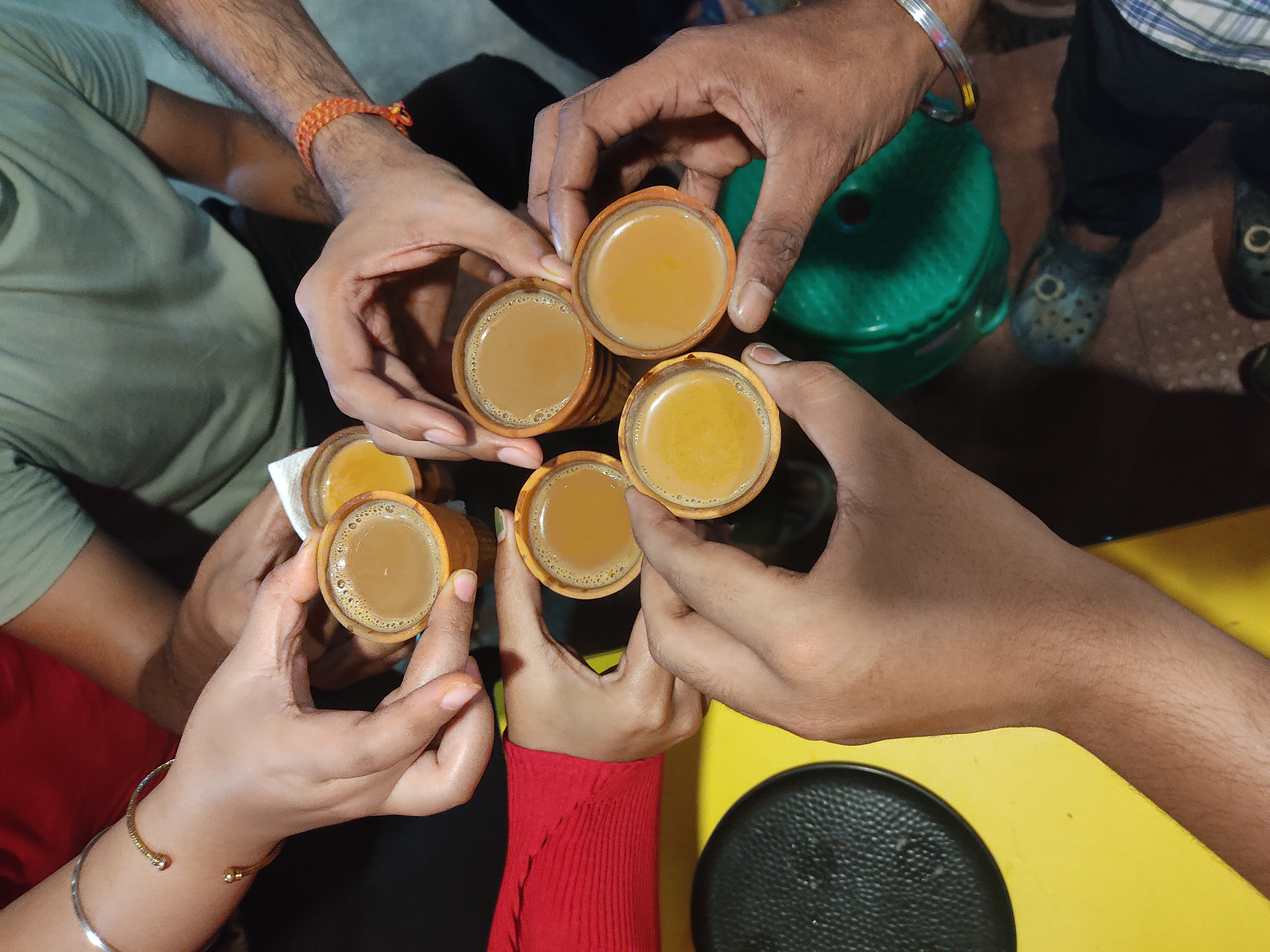
Regional styles vary even more than spice blends. The same feature describes Kashmiri noon chai, made with green tea, salt and baking soda, which turns it pink; Old Delhi chai, where milk is boiled separately until thick and poured over the tea; golden chai in Bhopal, made from reduced full-fat milk with cardamom and no added sugar; and Gujarati chai, extra milky and sweet with dried ginger and cinnamon. Chai is often served in kullad, small clay cups.
Frequently asked questions
Can I make masala chai with tea bags?
Yes. Use a strong black tea and simmer it briefly with the spices, then add milk. Loose tea gives more control, but tea bags work well for a quick cup.
Can I use plant-based milk?
You can. Some plant milks can separate when boiled hard, so keep the simmer gentle and add the milk toward the end.
Is masala chai caffeinated?
Yes, because it is made with black tea. A caffeine-free version can be made with rooibos or simply a spiced milk without tea.
Make chai part of your routine
Make one pot exactly as above, then change one thing at a time until it tastes like yours. Chai fits beautifully into a slow start to the day, as our guide to building a morning tea ritual suggests. Find more ways to brew and enjoy tea in our tea section.