This sake guide starts with the basics: sake is a Japanese brewed drink made from rice, water, koji and yeast, usually bottled at around 15 percent alcohol. Its main styles are named for two things, how much of each rice grain has been polished away and whether a little distilled alcohol was added. Lighter, aromatic styles such as ginjo are usually served chilled, while fuller junmai styles are often enjoyed at room temperature or warmed. Once you know those few terms, a sake list becomes far easier to read and to pair with food.
Key takeaways
- Sake is brewed from rice, water, koji and yeast, and most is about 15 percent alcohol.
- The polishing ratio tells you how much of the rice grain remains; lower means more polished.
- Junmai means no added brewer’s alcohol; ginjo and daiginjo describe higher polishing.
- Ginjo styles are usually served cool, junmai often at room temperature or warm.
- A traditional serving is stronger than a standard drink, so pace yourself and keep water or tea on the table.
How sake is made
According to JETRO’s guide to Japanese sake, sake uses four ingredients: water, yeast, koji and special sake rice. Its key process is what the guide calls multiple parallel fermentation, in which koji mold breaks rice starch into sugar while yeast turns that sugar into alcohol in the same vat. Japan’s official Sake 101 guide adds that sake is typically brewed to about 20 percent alcohol and then diluted with water before bottling, which is why most sake ends up around 15 percent. Undiluted sake, called genshu, is about 20 percent.
A small language note: in Japanese, “sake” can mean alcohol in general. The rice brew is specifically called nihonshu.
Reading the label: the main styles
The rice grain’s outer layers are polished away because they are less suited to brewing. The polishing ratio on a label is the percentage of the grain that remains, so 60 percent means 40 percent was removed.
| Style | Rice remaining after polishing | Added brewer’s alcohol | Typical character |
|---|---|---|---|
| Junmai | Not tied to a single figure | No | Fuller, earthy, rich in umami |
| Honjozo | About 70 percent | A small amount | Varies by brewer |
| Ginjo | 60 percent or less | Yes, unless labeled junmai ginjo | Fragrant and fruity |
| Daiginjo | 50 percent or less | Yes, unless labeled junmai daiginjo | Light, delicate, complex |
| Namazake | Any | Either | Unpasteurized, fresh |
| Nigori | Any | Either | Cloudy, creamy texture |
The Sake 101 guide makes two useful points. A lower polishing ratio usually costs more, but a higher grade is not a guarantee of better quality, and the word junmai is not a sure sign of quality either. Treat the label as a description of style rather than a ranking.
Sake guide to serving temperature
Sake is unusually flexible about temperature. The Sake 101 guide says it can be served chilled, warmed or at room temperature, that ginjo is usually preferred cool, and that junmai is often served at room temperature or warmed. Hot sake is called atsukan. JETRO likewise recommends serving ginjo chilled and suggests warm service for junmai. Personal taste matters, and each sake has its own sweet spot, so if a server or label suggests a temperature, start there.

Vessels and pouring etiquette
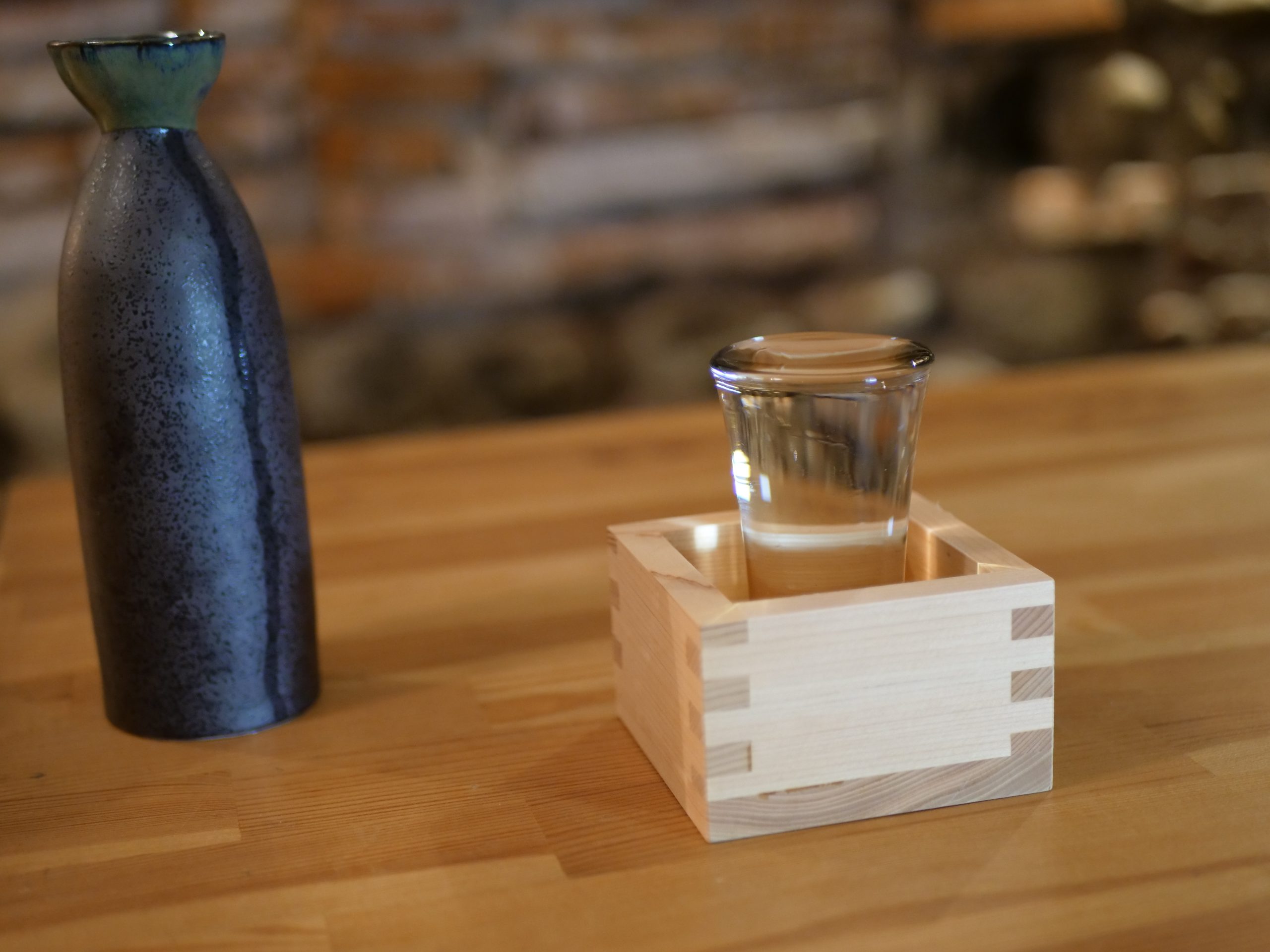
Sake is often poured from a small flask called a tokkuri into little cups called ochoko. Sometimes a glass is set inside a wooden box called a masu and filled until it overflows. JETRO notes that sommeliers may serve ginjo and daiginjo in a tapered wine glass so the aromas can develop.
The Sake 101 guide describes the etiquette. In formal settings, you do not refill your own cup; you keep others’ cups filled instead. When pouring for someone senior, hold the tokkuri in your right hand and support its base with your left. When receiving, hold your cup with one hand and steady it with the other, and take at least one sip before setting it down. Casual settings are more relaxed, but pouring for others is always polite.
Pairing sake with food
Sake is high in umami, which helps it work with a wide range of dishes. The Sake 101 guide lists classic matches such as sushi, sashimi and tempura, as well as cheese, oysters, vegetables and rich dishes like stews, ramen and steak. JETRO suggests junmai with hearty food, ginjo chilled as an aperitif and daiginjo with delicate sashimi. If you already enjoy matching wine to food, the same principles of weight and balance apply; our wine pairing basics and beer and food pairing comparison cover them in more depth.
Drinking sake sensibly
A traditional serving of sake, one go, is 180 milliliters. At around 15 percent alcohol, that holds more than one U.S. standard drink, which the National Institute on Alcohol Abuse and Alcoholism defines as about 14 grams of pure alcohol, the amount in 5 ounces of 12 percent wine. Small cups make it easy to lose count, so:
- Sip slowly and keep water or hot green tea on the table.
- Eat while you drink; sake is designed to go with food.
- Choose a non-alcoholic option if you are driving, pregnant, under the legal drinking age or simply prefer not to drink. Our buyer’s guide to non-alcoholic pairing has ideas that suit Japanese food well.
Frequently asked questions
Is sake a wine or a beer?
Neither, strictly. It is often called rice wine, but it is brewed from grain like beer, using a process of its own in which koji and yeast work at the same time.
Should good sake be served hot?
Usually not the most aromatic styles. Ginjo and daiginjo are typically served chilled to protect their aroma, while many junmai and everyday sakes are pleasant warm.
What is the difference between sake and shochu?
Sake is brewed and then diluted to around 15 percent alcohol. Shochu is a distilled spirit, and umeshu, which you may also see on Japanese menus, is a sweet plum liqueur made by steeping fruit in alcohol.
Ordering sake with confidence
Next time you see a sake list, look for three clues: junmai or not, the polishing grade, and the suggested temperature. Ask for one chilled ginjo and one room-temperature junmai to compare side by side with food. For more on matching drinks to dishes, browse our drinks and pairing section.